
High Blood Pressue
Overview
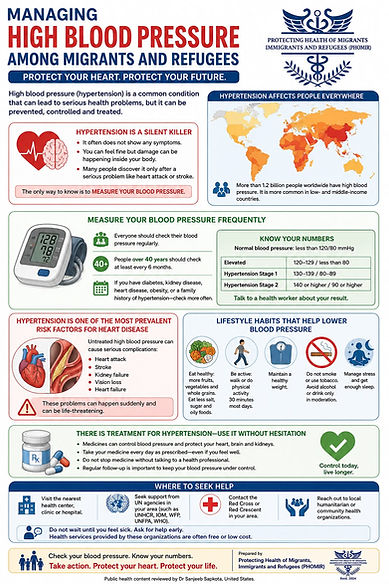
High blood pressure, also known as hypertension, is one of the most common chronic health conditions worldwide. It occurs when the force of blood against the walls of your arteries remains consistently too high. If left untreated, hypertension can lead to serious complications such as heart disease, stroke, kidney disease, and vision loss.
For migrants, immigrants, and refugees, maintaining regular healthcare and managing chronic conditions can be challenging due to relocation, stress, language barriers, and limited access to medical services. PHOMIR encourages regular blood pressure monitoring, healthy lifestyle choices, and timely medical care to reduce health risks.
What is High Blood Pressure?
Blood pressure is measured using two numbers:
-
Systolic Pressure: The pressure when the heart beats.
-
Diastolic Pressure: The pressure when the heart rests between beats.
According to current international guidelines:
-
Normal: Less than 120/80 mmHg
-
Elevated: 120–129 / Less than 80 mmHg
-
High Blood Pressure (Stage 1): 130–139 or 80–89 mmHg
-
High Blood Pressure (Stage 2): 140/90 mmHg or higher
Regular monitoring helps detect hypertension early.
Causes and Risk Factors
High blood pressure may develop gradually over time. Common risk factors include:
-
Family history of hypertension
-
Older age
-
Overweight or obesity
-
Physical inactivity
-
High salt intake
-
Diet high in processed foods
-
Smoking or tobacco use
-
Excessive alcohol consumption
-
Diabetes
-
Kidney disease
-
High cholesterol
-
Chronic stress
-
Poor sleep
Migrants and refugees may also experience additional stressors related to relocation, employment, financial challenges, and adapting to a new environment.
Signs and Symptoms
Hypertension is often called the "silent killer" because many people have no symptoms.
Some individuals may experience:
-
Headaches
-
Dizziness
-
Blurred vision
-
Shortness of breath
-
Chest discomfort
-
Nosebleeds (less common)
-
Fatigue
Many people feel completely well even when their blood pressure is dangerously high.
Why High Blood Pressure is Dangerous?
Untreated hypertension increases the risk of:
-
Heart attack
-
Stroke
-
Heart failure
-
Kidney disease
-
Vision loss
-
Peripheral artery disease
-
Dementia and cognitive decline
Early detection and proper management greatly reduce these risks.
Prevention
Healthy lifestyle choices are the most effective way to prevent or control hypertension.
Eat a Healthy Diet
-
Eat more fruits and vegetables.
-
Choose whole grains and lean proteins.
-
Reduce salt (sodium) intake.
-
Limit processed and packaged foods.
-
Reduce saturated and trans fats.
-
Drink plenty of water.
Stay Physically Active
Aim for at least 150 minutes of moderate physical activity each week, such as:
-
Walking
-
Cycling
-
Swimming
-
Dancing
-
Light jogging